One Pair of Boots, Entire Cast: The Solo Christmas Carol Is Having a Moment
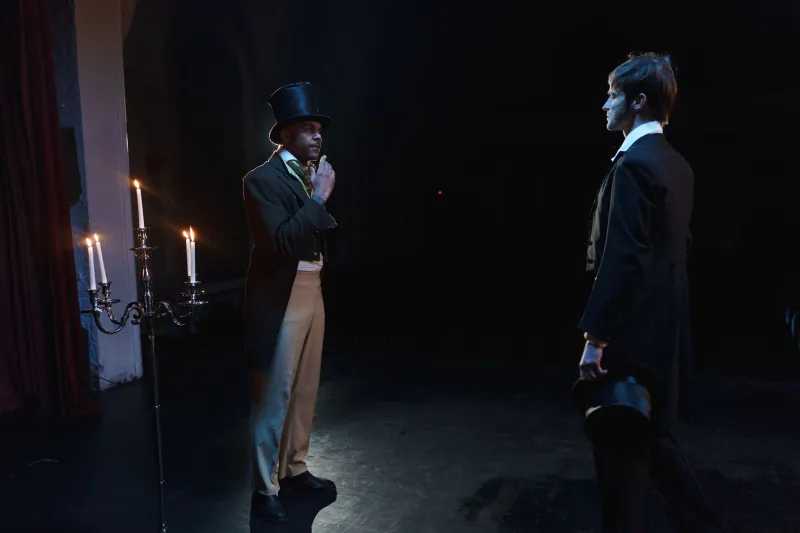
There is a particular sound in a small UK theatre when a solo Christmas Carol really works. It is not a big orchestral swell or a clanking chain. It is the hush of an audience realising that one actor is about to become everybody. Scrooge, Marley, Bob Cratchit, Tiny Tim, the three spirits — all of them, conjured by a voice, a lantern and a bit of well-timed boot leather.
Solo Dickens is not new. Storytellers have been doing one-person versions of A Christmas Carol for decades, often in schools, libraries and church halls. But in 2026 the format feels especially visible. Fringe venues are programming it, pubs are hosting it, village halls are selling it to families who want something festive without a West End price tag. The one-person Carol has become a practical, portable answer to a very British question: how do you make a big Victorian ghost story work in a room the size of a decent front room?
The cast is in the voice
On paper, the solo Carol sounds like a compromise. No ensemble, no big set, no scene-stealing Fezziwig party. In practice, it can be the opposite. With nobody else to look at, the audience leans in. The performer becomes the whole world of the play, and the audience becomes the crowd, the choir and the Cratchit dinner table.
Actors working in the format tend to talk about the same handful of tricks. First, the voice: not just accents, but rhythm. Scrooge snaps; Bob Cratchit softens; Marley rattles. Second, the body: a change of posture can do more than a costume change. Third, the prop: a candle, a ledger, a chain, a single chair. The best solo versions do not try to hide the fact that you are watching one person. They make that fact part of the fun.
Directors often say the hardest part is not playing the ghosts — it is managing the transitions. A solo Carol has to move from counting house to bedroom to past to present to future without a cast to carry the scene changes. The good ones use sound, light and a bit of cheeky audience contact. The less good ones use a lot of frantic mime and a playlist of sleigh bells.
Why it tours so well
There is a straightforward reason solo Carols are multiplying across UK venues: they travel. A one-person show can fit into a car, a train bag or, at a push, a very patient rucksack. It does not need a full get-in, a large dressing room or a cast of twelve who all need feeding. That makes it viable for pub theatres, arts centres, rural touring schemes and village halls that could never host a full-scale Dickens adaptation.
It also suits the way families actually book festive theatre. A solo show can be 70 or 80 minutes, with no interval, which is handy for younger children and grandparents alike. Ticket prices tend to be lower. Venues can put on two shows in an evening. And because the format is flexible, performers can adjust the tone — a little more comic for a family crowd, a little more gothic for a late-night pub audience.
The result is a strange but welcome sight: a Victorian novella, published in 1843, finding a new life in the back room of a British pub with a Christmas tree in the corner and a radiator that clanks at exactly the wrong moment.
What to look for this season
If you are hunting for a solo Carol in 2026, the listings language is your friend. Look for phrases such as “one-man”, “one-woman”, “solo storytelling”, “one actor”, “storytelling adaptation” or “performed by”. Fringe venues and arts centres often describe the format clearly; pub listings can be more mysterious, so check the running time and age guidance.
A few practical tips. A good solo Carol usually has a clear running time — anything under 90 minutes is a strong sign it has been shaped for families. Check whether the venue is seated or partly standing; a pub back room can be brilliant, but not if you are balancing a seven-year-old on a bar stool. And look at the photographs. If the publicity shows one performer, one chair and a lantern, you are probably in safe hands.
The best ones also resist the urge to turn Dickens into a one-person variety show. The solo format works when the performer trusts the story. Marley does not need a smoke machine. Tiny Tim does not need a child actor. The audience can fill those gaps, and often does so more vividly than any set could manage.
The ghost of theatre past — and future
There is something fitting about the solo Carol in a year when many UK venues are still watching every penny. Dickens wrote a story about a man who learns to share what he has. A one-person production shares what theatre has always had: a performer, a space and an audience willing to imagine the rest.
So if your local listings offer a solo Christmas Carol this winter, it is worth a punt. You will not get a full cast, a revolving stage or a chorus of Cratchits. You will get one actor, three spirits and a room full of people quietly doing the rest of the work. In a small UK venue, with a candle flickering and the rain on the window, that can feel like the whole cast has turned up after all.