The Phantom With No Lines: Staging Christmas Yet to Come in 2026
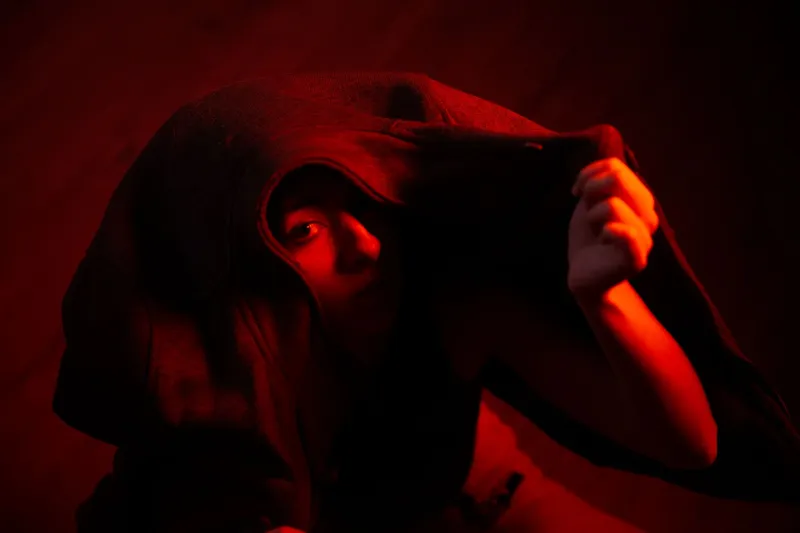
Every Christmas Carol has a moment when the theatre seems to hold its breath. Scrooge has argued with his past, danced through Fezziwig's warehouse and watched his present unravel. Then the lights shift, the music thins out, and a figure arrives who does not speak, does not smile and does not need to do either. Christmas Yet to Come is the final ghost, and in many productions he is the one audiences remember on the walk home.
That is a strange thing for a theatre-maker to contemplate. A silent, faceless phantom should be the easiest character to lose in a crowded adaptation. Instead, he often becomes the production's signature image: a tall shape at the edge of the stage, a lantern where a face should be, a hem of black cloth dragging across floorboards. In 2026, UK theatres are approaching the challenge with a mix of old-fashioned stagecraft and very modern design technology. The result is a figure who can be terrifying, yes, but also unexpectedly tender.
The hardest entrance in Dickens
The ghost's power comes from restraint. Dickens gives him no dialogue, no facial expression and almost no physical description beyond a dark, shrouded presence and a silent point. Directors have to make a decision early: how literal should this figure be? A man in a black hood can look like a fancy-dress shop leftover. A pure shadow can feel abstract. A giant puppet can be magnificent, but only if the audience forgets the puppeteers within seconds.
The best stagings treat the ghost as a piece of theatre rather than a costume. He is a shape, a weight, a change in air pressure. He is the moment when the production stops explaining and starts trusting its audience. That is why the final spirit so often attracts the most inventive work in the building.
Height, cloth and the art of not showing
Height is the simplest tool and still one of the most effective. Stilts, platform boots and extended robes can turn an ordinary performer into something that seems to occupy too much vertical space. But height alone is not enough. The costume has to move. A robe that trails like smoke, a sleeve that swallows the actor's hands, a hood that never quite reveals the face: these are the details that keep the figure from looking like a person in a cloak.
Lighting does the rest. A hard side-light can throw the ghost's shadow across the back wall while the figure himself remains half-lost in darkness. A low, cold wash can make the stage feel like a churchyard at dusk. Some designers use gauze and forced perspective to make the phantom seem to hover. Others keep him firmly on the floor and let the shadow do the impossible work. Either way, the audience's eye is being directed away from the ordinary and towards the suggestion of something vast.
Puppetry, shadows and the rule of three
Puppetry has become a rich avenue for the final ghost. A giant rod puppet can be operated by three visible performers in dark clothing, their movements synchronised so that the figure seems to breathe as one creature. The operators are not hidden so much as absorbed into the stage picture. Done badly, it looks like a school project. Done well, it is genuinely unsettling: the ghost's point is not a gesture from a wrist but a decision made by a whole body.
Shadow work is equally potent. A performer behind a screen can become enormous, distorted, almost architectural. In smaller touring productions, where a full-scale puppet is impractical, a hand-held lantern and a long shadow can achieve more than a costly mask. The trick is to give the audience one clear image and then refuse to explain it.
Sound that does the talking
If the ghost cannot speak, the sound department must speak for him. A low cello note, bowed so slowly it is almost a vibration. A distant bell. Wind through a crack. The scrape of a hem on stone. Silence itself, held just long enough to become uncomfortable. Sound designers often talk about the final ghost as a cue rather than a character: the moment when the production's usual musical language drops away and something colder takes its place.
In 2026, more UK productions are using directional sound to make the phantom feel close to individual audience members. A whisper behind the left ear, a footstep from the aisle, a breath that seems to come from the seat next door. These effects must be used sparingly. The ghost is most frightening when the audience is not quite sure whether they heard anything at all.
Terror and tenderness in the same gesture
What makes Christmas Yet to Come more than a Halloween cameo is his relationship with Scrooge. The ghost does not gloat. He does not argue. He simply shows. The best performers find a strange compassion in that silence: they are not there to punish Scrooge but to let him see what awaits if he does not change.
That balance matters especially for family audiences. A ghost who is too scary can send younger children under the seats. A ghost who is too cosy loses the stakes. The sweet spot is a figure who feels solemn rather than sadistic, awesome rather than gory. When the phantom points towards a grave, the point should land like a question, not a threat.
What to watch for in 2026
When you book a Christmas Carol this season, keep an eye on how the production advertises its final ghost. Does the marketing show a shadow, a lantern, a puppet, a silhouette? That usually tells you something about the production's style. In the theatre, watch the edges of the stage rather than the centre. Listen for the moment the music stops. Notice how the actors playing Scrooge and the ghost share the space: whether they stand close, whether they circle each other, whether the ghost ever seems to hesitate.
The silent phantom is a reminder that stagecraft is not about showing everything. It is about making an audience lean forward into the dark. Christmas Yet to Come may never say a word, but in the right production he speaks volumes.