Ninety Minutes of Dickens: Why the Interval-Free Christmas Carol Is Winning Families Over

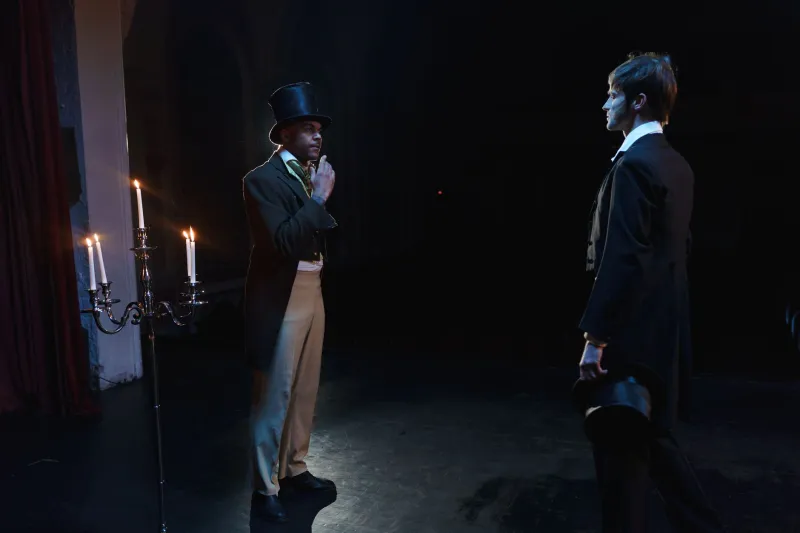
Photo: modern theatre audience families Christmas Carol short interval-free production UK 2026, via assets.stickpng.com
We need to talk about the interval. Or rather, the lack of one. Across the UK this winter, a growing number of theatres are betting on a Christmas Carol that runs about ninety minutes straight through, no bar break, no ice-cream queue, no second-half slump. For families with small children, it is a blessed relief. For Dickens purists, it is a provocation. As someone who has sat through both four-hour epics and brisk seventy-minute sprints, I think the truth is somewhere in the middle — but the sprint is winning more arguments than it used to.
The case for the quick dash
Let's be honest about the economics of a family night out. Tickets are expensive, trains are unreliable, and the babysitter charges by the hour. A Christmas Carol that starts at 6pm and finishes by 7.30pm is a different proposition from one that drags you home after 10pm on a school night. The ninety-minute version says: we respect your time, your wallet and your child's attention span. That is not a small thing.
It also suits first-time theatregoers. Dickens's novella is short, punchy and built around a handful of big scenes. A tight adaptation can hit Marley, the three ghosts and the redemption without a single sag. When it is done well, the lack of an interval actually helps. There is no chance for the spell to break, no opportunity for the audience to check phones or debate whether to have another drink. You are in the story from the first chain-rattle to the final "God bless us, every one".
What we lose when the pudding is cut
But let's not pretend there is no cost. A Christmas Carol is a ghost story as much as a festive treat, and ghost stories need slowness. Marley's face on the door knocker works because Scrooge has had time to be horrible, and because the audience has had time to settle into the cold. The Ghost of Christmas Present's tour of London is not just a montage; it is a chance to see the city's poverty and plenty side by side. Cut too hard and you get a highlights reel: sad Scrooge, scary ghost, happy ending. It is satisfying, but it is not quite Dickens.
There is also the question of the interval as a social ritual. For many theatregoers, the break is part of the pleasure: a glass of wine, a chat about the ghosts, a trip to the loo. Removing it can make the evening feel less like a night out and more like a very expensive assembly. Families might cheer, but the friends-and-couples crowd may feel short-changed.
Is the interval just a toilet break?
Not entirely. An interval is a structural tool. It gives the audience a chance to breathe, and it gives the second half a fresh start. In a Christmas Carol, the interval often falls after the Ghost of Christmas Present, which means you return for the grim future with a slight chill already in the air. That can be powerful. But it can also deflate the tension. A no-interval production keeps the audience in the dark, and for a story about a man being terrified into kindness, that is not nothing.
2026 venues betting on a tighter night out
This year, several UK theatres are leaning into the sprint. The Lowry in Salford has a ninety-minute adaptation aimed squarely at families, with an early start and a finish time that leaves room for chips on the way home. York Theatre Royal is offering a no-interval version that uses actor-musicians to keep the energy up, and Derby Theatre's production is clocking in around eighty minutes with a streamlined cast. The egg in Bath and the Unicorn Theatre in London are both running shorter, family-friendly Carols that prioritise clarity and pace over period detail. The Dukes in Lancaster and Norwich Theatre Royal are also in on the act, with productions that promise to have you back on the pavement before the last train.
What these venues have in common is a willingness to treat the ninety-minute Carol as a legitimate form rather than a compromise. They are not just cutting scenes; they are rethinking how the story is told. Puppetry, song, direct address and ensemble doubling all help. When the production is designed for speed, the speed feels like style rather than haste.
A false economy?
There is a risk, of course. A bad ninety-minute Carol is a rushed one: scenes bump into each other, the ghosts arrive like buses, and Tiny Tim's death is dispatched before we have had time to care. The difference between a tight adaptation and a thin one is usually about ten minutes of quiet. Directors who understand the material know that you cannot cut the silence, only the furniture. The best short Carols keep the pauses — the moment Scrooge sees his own grave, the pause before he asks the boy about the turkey — and cut the crowd scenes instead.
The verdict: both can coexist
I do not think the interval-free Christmas Carol should replace the full-length version any more than a mince pie should replace a Christmas pudding. But as a gateway for families, first-timers and anyone who has ever watched the clock during a three-hour ghost story, it is a genuinely good thing. The rise of the ninety-minute sprint is not an attack on Dickens; it is an acknowledgement that his story is strong enough to survive a bit of trimming. In 2026, the smartest theatres are offering both: the full Dickensian feast and the quick, bright, home-before-bedtime dash. Audiences can choose their own adventure. That feels like progress.