The Chain, the Phantom and the Grave: Letting Kids Meet the Real Christmas Carol
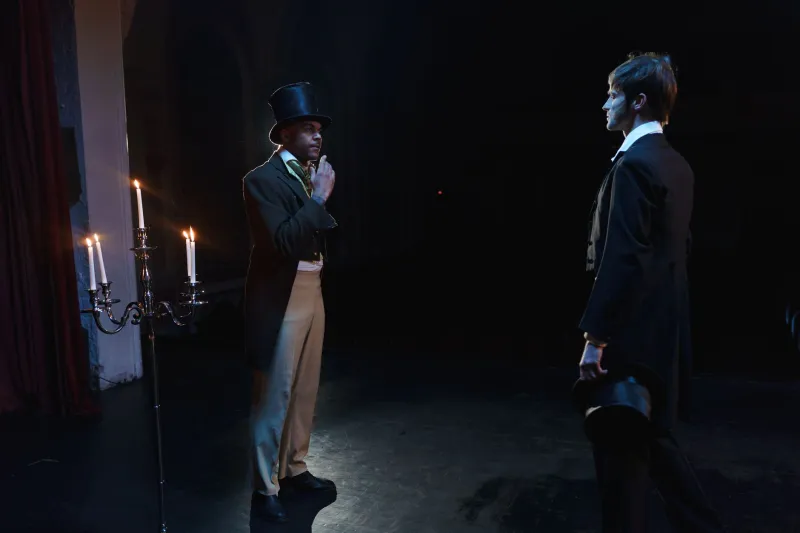
There is a moment in almost every good production of A Christmas Carol when the audience goes quiet in a very particular way. Not the polite hush before a carol. The other one. The oh-no-he-is-actually-going-to-do-it hush. Maybe it is the knocker on Scrooge's door. Maybe it is the chain dragging across the floorboards. Maybe it is the silent, hooded figure who says nothing at all and somehow says everything.
That moment is not a flaw in a family show. It is the point.
Here at A Christmas Carolish, we love the tinsel and the sugar mice as much as anyone. But an adaptation that removes all the eeriness is not really adapting Dickens. It is wrapping him in bubble wrap and hoping nobody notices the story has gone limp.
Marley was dead, and that still matters
Dickens is unusually blunt about it. Marley is dead. Dead as a doornail. The opening pages are not cosy; they are cold, foggy and full of warning. The horror in A Christmas Carol is domestic horror: a lonely man in a cold house, a face in a door knocker, a chain made of cash-boxes and ledgers, a future with a grave in it.
Children understand this more than we sometimes give them credit for. They know what it feels like to be left out, to be told off, to worry about someone they love. The scary parts of the story are not separate from the kind parts. They are what make the kindness land.
If you cut the grave, you weaken the ending. If you cut the silent phantom, you lose the greatest lesson in listening in all of Victorian literature. If you cut the chain, you are left with a man who is merely grumpy rather than a man who has been quietly poisoning his own soul.
Why a safe scare is good for children
Theatre is one of the safest places in the world to be frightened. The lights go down, the story begins, and everyone in the room agrees to pretend together. A child can feel the thrill of dread while sitting next to a grown-up, in a building with exits, with a bag of sweets in their lap. That is a powerful thing.
A good scare, handled well, does three useful jobs. It teaches empathy, because we feel for Scrooge before we like him. It teaches resilience, because the frightening bit ends and the lights come up. And it teaches that stories can hold big feelings without breaking.
There is also something wonderfully old-fashioned about it. Dickens was a showman. He loved a crowd, a gasp and a good cry. A family production that refuses to be even slightly unsettling is not being faithful to him; it is being a bit polite on his behalf.
The bits we should never sand off
Not every production needs smoke machines or a ghost popping out of a cupboard. In fact, the best ones often do less. But there are moments that should survive the journey from page to stage.
- The knocker. It should make you look twice.
- The chain. It should sound heavy, awkward and real.
- The Ghost of Christmas Yet to Come. Silent, still and genuinely unnerving.
- The grave. Not gory, just final.
- Ignorance and Want. Two children under the robe, and one of the most quietly devastating images Dickens ever wrote.
- The moment Scrooge asks whether Tiny Tim will live. That is not a scare, exactly. It is a cold hand on the shoulder.
None of this needs to be cruel or graphic. Atmosphere beats gore every time. A creaking floorboard is worth ten fake blood capsules.
How young is old enough?
There is no single answer, and any theatre that claims otherwise has not met many children. A rough guide, though: under-fives may enjoy a gentler, song-heavy version with plenty of light and no sudden appearances from the aisle. Five to seven-year-olds can often handle the story if they know it already and if a grown-up has talked them through the scary bits. Eight and up is usually where the real Dickensian chill starts to become a pleasure rather than a worry.
But age is only part of it. A child who hates loud noises will not be won over by a brilliant production with a foghorn. A child who loves ghosts may be bored by a version that keeps everything safely in the parlour. Check the venue's age guidance, ask about jump scares, smoke, strobe lighting and loud bells, and look out for relaxed performances, which many UK theatres now offer around Christmas.
And do not underestimate the power of preparation. Read a picture-book version first. Watch a short animation. Tell them that Scrooge starts off horrible and ends up generous. Half the fear is fear of the unknown.
Productions that get the balance right
The Old Vic's in-the-round Christmas Carol has built a reputation for understanding that Dickens is supposed to be a little bit frightening. Candlelight, carols and a genuinely unsettling silent ghost do more than any amount of fake snow. Smaller venues often get it right too, because there is nowhere to hide when the chain starts dragging. Pub theatres and studio spaces can be brilliantly intense, so long as the age guidance is honest.
Look for productions that advertise a recommended age rather than a vague promise that it is fun for all the family. Look for reviews that mention atmosphere rather than just costumes. Look for a Scrooge who seems genuinely lost before he is found.
A parent-friendly scare-safe checklist
Before you book, ask yourself: has my child met this story before? Do they like being surprised, or do they prefer to know exactly what is coming? Can they sit through a full act without needing the loo? Do they mind the dark?
On the night, sit where you can see the exits and where your child can see you. Explain that the actors are real people and the ghosts are costumes and lighting. Agree on a signal for if it gets too much. And remember that leaving at the interval is not a failure; it is good parenting.
The last bell
A Christmas Carol is not a threat. It is a reminder. The shiver is part of the hope. Keep the tinsel, keep the carols, keep the silly dancing in Fezziwig's warehouse. But please, keep the chain too.
Marley was dead, to begin with. That is where the story starts. It is also why the ending feels like such a gift.