The Growl That Isn’t a Growl: How Scrooges Keep ‘Bah Humbug’ Alive Night After Night
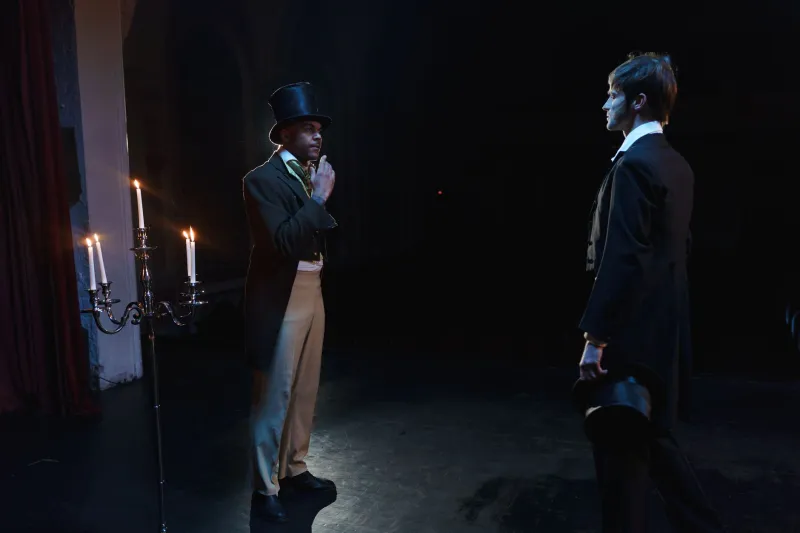
Every production of A Christmas Carol eventually arrives at the same two words. The décor may be Victorian or pared-back, the ghosts may fly or shuffle, the Cratchits may sit down to a full turkey or a symbolic sprout, but sooner or later a Scrooge has to growl ‘Bah humbug.’ It is the line everyone waits for, the one half the audience could deliver themselves, and the one most likely to be repeated in the bar afterwards. Which is precisely why it is so difficult to get right.
The line before the line
‘Bah humbug’ does not begin on the B. It begins in the pause before it. Performers and directors working in UK festive theatre this year consistently describe the same pressure point: the moment Scrooge is invited to agree that Christmas is a good thing, and refuses. The refusal has to be active. It has to cost him something, even if the cost is only the effort of being unpleasant.
If the pause is too short, the line becomes a reflex. If it is too long, the audience starts anticipating the joke and the scene turns into a waiting game. The best Scrooges make the pause feel like a decision. You can almost see the character choosing to be difficult because the alternative — joining in — is too frightening. That is when ‘Bah humbug’ stops being a catchphrase and becomes a tiny piece of characterisation.
Laugh, threat or wound
The same two words can land in three completely different ways. As a laugh, they are a bit of seasonal mischief: the grumpy uncle at the table, the man who refuses the paper hat. As a threat, they carry weight. This Scrooge is not merely bad-tempered; he is a man who can make other people’s lives smaller. As a wound, the line is quieter and far more interesting. It suggests that Christmas has hurt him before, and he would rather spoil it than risk being disappointed by it.
None of these readings is wrong. The problem is when a production has not decided which one it is doing. A Scrooge who plays the line for a laugh and then expects us to be moved by his isolation ten minutes later is asking the audience to do two jobs at once. The craft lies in the consistency of the refusal, not the volume of the growl.
Eight shows a week, same two words
Repetition is the actor’s real opponent. A matinee and an evening show on the same day can make any line feel like a bus timetable. The performers who keep it fresh tend to change the target rather than the text. One night the line is aimed at a nephew; another night it is aimed at the carol singers; another night it is aimed inward, almost under the breath. The words stay the same, but the person Scrooge is trying to silence changes.
Directors often talk about protecting the line from itself. If it is delivered with a nudge and a wink every night, it becomes a pantomime boo-hiss moment. If it is delivered with too much reverence, it can sound like a lecture. The sweet spot is a line that feels spoken rather than announced — as if Scrooge has said it a thousand times before and will say it a thousand times again.
Panto is in the room, whether you like it or not
UK festive audiences arrive with panto instincts. They know how to respond to a villain, how to cheer a transformation and how to enjoy a well-timed growl. That is not a problem, but it is a temptation. A Scrooge who leans too far into the panto energy can turn the counting house into a boo-hiss palace. The audience may love it, but the later scenes can struggle to recover.
The smarter productions use that energy without surrendering to it. They let the audience enjoy the grumpiness, then quietly close the door on the joke. By the time the ghosts arrive, the laughter has somewhere to go. ‘Bah humbug’ can be a welcome mat, but it should not be the whole house.
Playing to the cheap seats – and why it can backfire
The phrase ‘playing to the cheap seats’ is not snobbery; it is a technical warning. In a large Victorian-style auditorium, the gallery needs to see and hear the shape of the line. That can encourage a big, broad delivery. But a line shouted to the back wall can lose its texture for the people in the stalls, and a line whispered for the front row can vanish upstairs. Good Scrooges pitch the line to the whole house without turning it into a foghorn.
This is where accent, rhythm and consonants matter. A clipped ‘Bah!’ followed by a swallowed ‘humbug’ can sound like a bark. A drawn-out ‘Bah humbug’ can sound like a sigh. A line delivered with a smile can be unsettling; a line delivered with a scowl can be merely predictable. In 2026 productions, listen for the choices rather than the volume.
What to listen for this winter
When you settle into your seat for a Christmas Carol this December, keep an ear on three things. First, the pause before the line: does it feel like a decision or a cue? Second, the direction of the line: is Scrooge dismissing someone else, or trying to dismiss something in himself? Third, the aftermath: does the audience laugh, and does the production seem to want that laugh?
Those small details tell you a lot about the Scrooge you are watching. They also explain why the same two words can survive eight shows a week, year after year, without quite wearing out. ‘Bah humbug’ is not really a growl. It is a little act of defiance, and every actor has to find a new reason to mean it.